If you live in the Lowcountry — Beaufort, Bluffton, Hilton Head, or Charleston — you probably assume your tap water is safe. After all, it meets EPA standards, right?
Here's the thing: "meets standards" doesn't mean "clean." Federal guidelines allow trace amounts of dozens of contaminants in your drinking water. And in the Lowcountry, our unique geography creates water challenges that many other regions don't face.
The Lowcountry's Unique Water Challenges
Our coastal location, high water table, and mix of city and well water sources create a perfect storm of water quality issues. Here's what we commonly find when we test homes across the region:
City Water (Municipal Supply)
- •Chlorine & Chloramines — Added to kill bacteria during treatment, but they stay in your water all the way to your faucet. They dry out skin and hair, affect taste, and create chemical byproducts (THMs) linked to health concerns.
- •Trihalomethanes (THMs) — Byproducts of the chlorination process. The EPA regulates these, but even "acceptable" levels are worth minimizing.
- •Moderate Hardness (3-7 gpg) — Not extreme, but enough to leave spots on dishes, dry out skin, and slowly damage appliances over time.
- •VOCs (Volatile Organic Compounds) — Industrial chemicals that can leach into water supplies, especially in areas with older infrastructure.
Well Water
- •Iron & Manganese — Common in coastal wells. Causes orange/brown staining on fixtures, metallic taste, and discolored laundry.
- •Hydrogen Sulfide (Rotten Egg Smell) — That sulfur smell isn't just unpleasant — it indicates bacterial activity in your well.
- •Bacteria & Coliform — Without municipal treatment, well water is vulnerable to bacterial contamination, especially after heavy rains.
- •High Hardness (10+ gpg) — Many Lowcountry wells produce very hard water that wreaks havoc on plumbing and appliances.
What Does This Mean for Your Family?
Most of these contaminants won't make you sick overnight. But long-term exposure to chlorine byproducts, heavy metals, and chemical contaminants adds up. And the everyday effects — dry skin, bad-tasting water, spotty dishes, damaged appliances — are things you're dealing with right now.
The good news? Every one of these problems is solvable with the right water treatment system. Not a one-size-fits-all box from a big-box store — a system tailored to your specific water source and your home's needs.
How to Find Out What's in Your Water
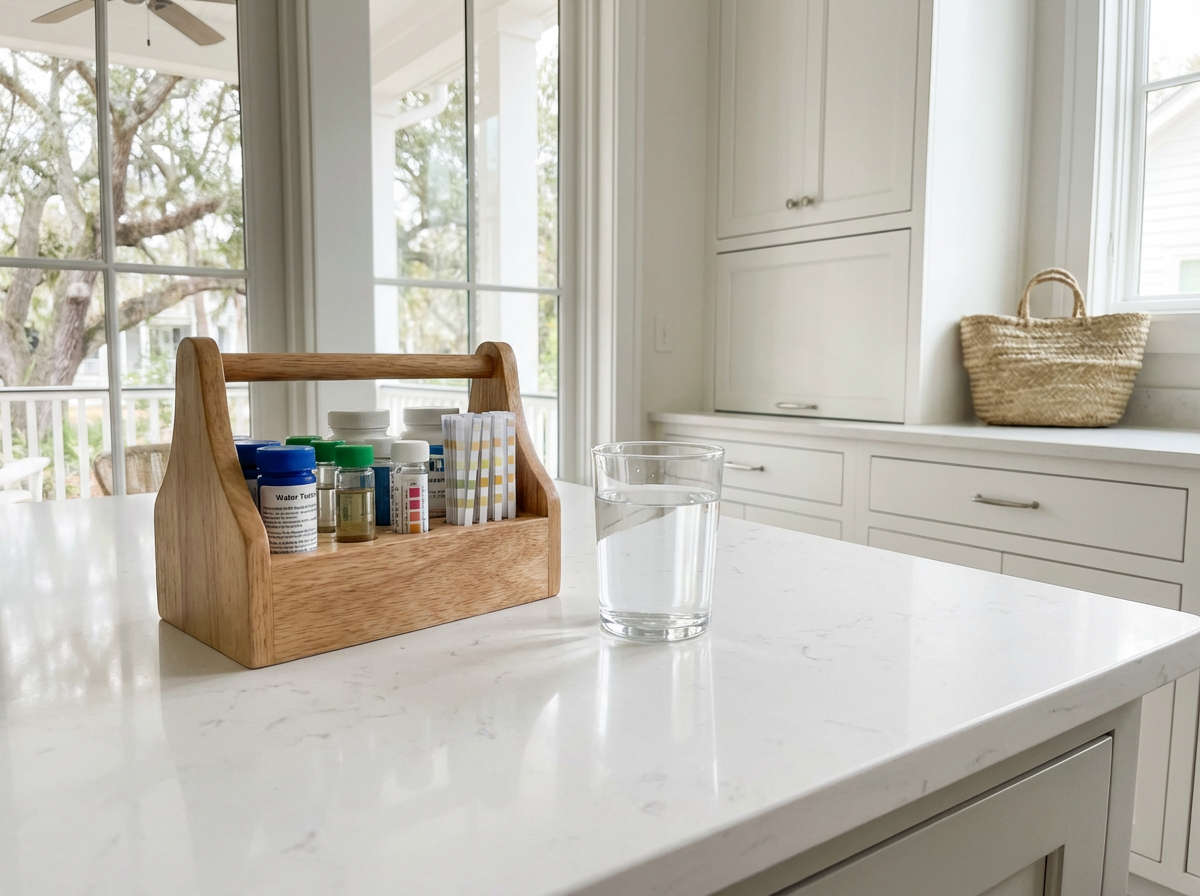
The only way to know for sure is to test it. Not with a $10 strip from Amazon — with a proper inspection that tests for hardness, TDS, chlorine, iron, pH, and other contaminants specific to your area.
That's exactly what we do. For free. No obligation, no pressure. We show up, test your water, explain the results in plain English, and give you an honest recommendation. If you don't need a system, we'll tell you that too.
Get Your Free Water Inspection
Find out exactly what's in your water. No cost, no obligation, no pressure.
Schedule Now